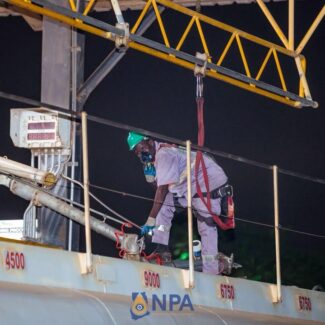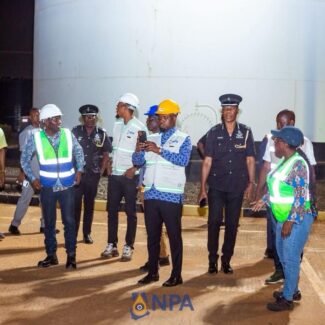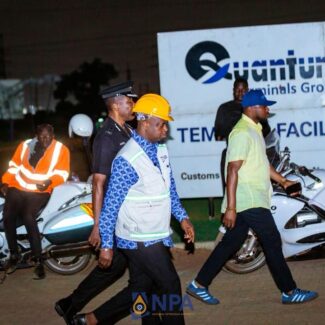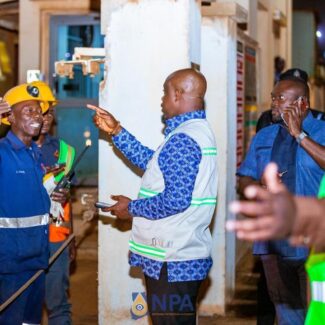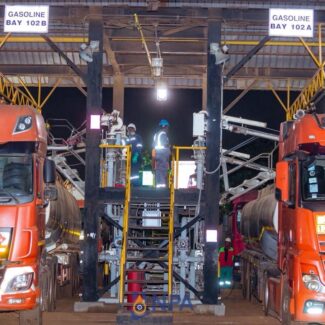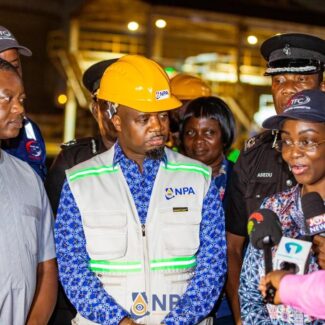
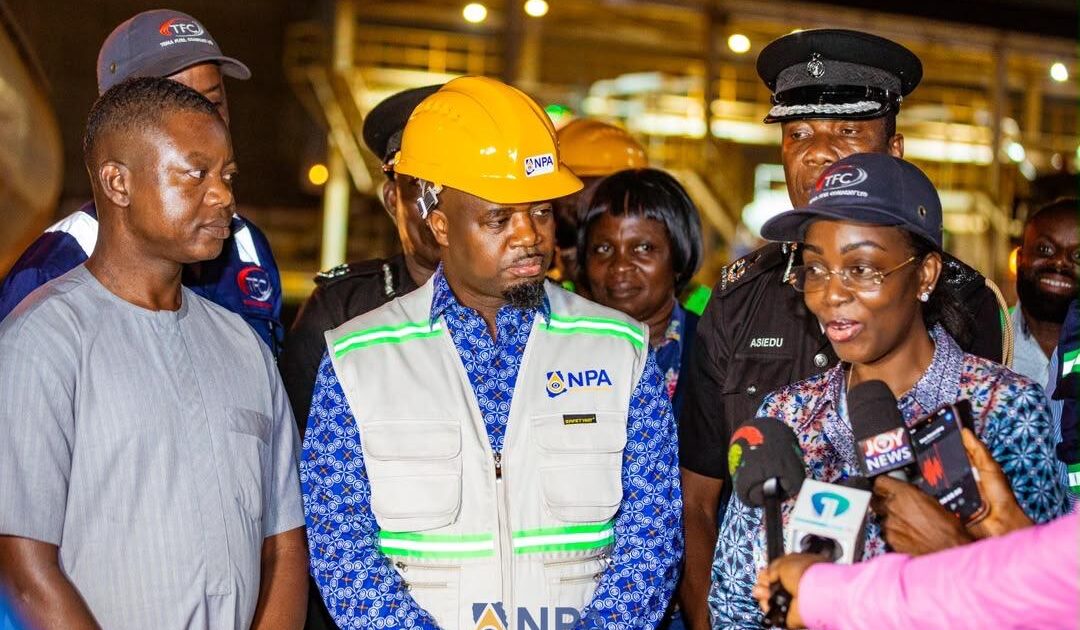
The Chief Executive of the National Petroleum Authority (NPA), Mr. Godwin Kudzo Tameklo, Esq., has undertaken a night-time inspection of selected petroleum depots in Tema to assess the progress of the pilot phase of the government’s 24-hour economy programme in the downstream petroleum sector.
Mr. Tameklo was accompanied by the Lead for Energy at the 24-Hour Economy Secretariat, Mr. Roland Azuguvu; the Director for the 24-Hour Programme at the Ghana Police Service, ACP Benjamin Ania; the Tema Regional Police Commander, DCOP Asiedu; the liaison for the 24-Hour Programme at the National Security Council Secretariat, Air Commodore Francis Ayamba; Directors of the National Petroleum Authority; and representatives from the Customs Division of the Ghana Revenue Authority.
The delegation visited several fuel depots to engage management and staff on the implementation of the initiative, assess operational challenges, and identify opportunities to maximise the programme’s impact.
The team received encouraging feedback from operators, who reported significant improvements since the launch of the pilot programme in May this year, including extended operating hours, expanded workforce and shift systems, increased fuel throughput, and higher revenue.
At Quantum Terminals, the management explained that the facility was purpose-built with redundant backup systems, advanced digital technology, and 24-hour operational capability, positioning it to support the government’s vision.
Officials noted that the terminal’s real-time monitoring systems enable efficient fuel loading and receipt while its operational flexibility allows for the handling of specialised petroleum products and multilingual customer support.
At Petroleum Hub Limited, the management disclosed that the depot has a storage capacity of approximately 50,000 metric tonnes and is currently loading about 5,000 metric tonnes of petroleum products daily under the initiative. Officials observed that most loading activities now take place during the evening, reflecting the growing adoption of round-the-clock operations by industry players.
While describing the pilot as successful, management highlighted challenges including inadequate lighting, security concerns and third-party staffing, which are being addressed.
At Tema Fuel Company Limited (TFCL), the Head of Finance and Stocks, Nana Adjoa, said the depot, which loads LPG, petrol and diesel, has participated in the pilot programme since May.
She explained that the initiative has significantly improved operations by enabling the depot to complete all daily loading orders, reducing delays for transporters and customers. The facility currently operates a two-shift system, with management indicating that operating hours could be extended further if demand increases.
The inspection also took the delegation to VANA Energy, where management explained that the depot now operates a two-shift system from 8:00 a.m. to 10:00 p.m., with the flexibility to extend operations until midnight when necessary. The depot receives petroleum products from the Tema Oil Refinery (TOR) via pipeline and has recorded increased loading volumes since joining the pilot.
Management disclosed that GOIL alone now lifts approximately 35 tanker trucks of gasoline daily, attributing the increase to the flexibility created by extended operating hours, which has enabled the depot to meet growing customer demand.
Despite the positive feedback, depot operators raised concerns about poor road conditions and inadequate street lighting within the Tema Industrial Area, describing them as major operational challenges.
In separate remarks at the depots on Tuesday, the NPA Chief Executive praised the management of the depots for embracing the initiative, emphasizing the downstream petroleum sector’s strategic role in driving the 24-Hour Economy Programme.
He reiterated that the 24-Hour Economy Programme is a long-term national policy that will continue to evolve through stakeholder engagement and continuous improvement.
“The downstream petroleum sector has demonstrated that the 24-Hour Economy is practical and achievable.
“The increased throughput, expanded workforce, additional shift systems and improved productivity we have witnessed are clear indications that the initiative is already delivering tangible benefits for businesses and the national economy,” he said.
Mr. Tameklo reaffirmed the commitment of the NPA, the Ghana Police Service, the 24-Hour Economy Secretariat, the Ghana Revenue Authority (Customs Division), the Ghana National Fire Service and other stakeholders to ensuring the safe, efficient and sustainable implementation of the programme across the downstream petroleum sector.
The NPA Boss assured operators that their concerns would be escalated to the relevant government agencies and the Ministry of Energy to facilitate improvements in road infrastructure and street lighting.
The Ghana Police Service also reaffirmed its commitment to providing adequate security for the programme, while representatives from the Customs Division of the Ghana Revenue Authority pledged continued support to facilitate trade while safeguarding government revenue.